
The silk saree has sat folded in the cupboard since last Deepavali. The velvet kurta came back from a wedding looking a bit tired. And that embroidered dupatta still smells faintly of someone else's perfume.
So what goes to the cleaner, and what should you leave alone? How early is early enough? And is there a way to do all this without damaging the zari you're trying to protect?
Festive outfit dry cleaning isn't complicated, but a few small details decide whether a piece comes back brilliant or slightly off. Here's how we'd go about it.
Start With the Calendar, Not the Cupboard
Everyone remembers their festive clothes in the same week. That's the problem with leaving festive wear dry cleaning to the last minute. Leave it until the last few days and there's no room for a stain that needs a second attempt, or a hook that needs stitching back on.
Pull every outfit out two to three weeks before Deepavali. Lay each one flat in good light and look properly. Check for stains, underarm marks, a stale smell, loose threads, missing sequins and broken hooks. Fix the small things first. Our darning and minor tailoring service handles loose hems, hooks and seams, so a repair doesn't have to wait until the night before.
Then sort the pile into three: needs cleaning, needs pressing only, and is fine as it is. Good festive clothes care starts with this look, and that third pile is usually bigger than you'd expect.
Silk Sarees: Not Out of Habit, Wash When Needed
Water and silk don’t mix. This could lead to rings, dull the shine or change the drape of the fabric and thus make silk saree dry cleaning a popular method for Kanjeevaram, Banarasi and Mysore silks.
But more cleaning is not better. Most care guides recommend professional cleaning after a few wears or when the dirt is visible, not after each walk. Zari has a metallic finish that can become dull with frequent cleaning over time.
When you give your saree away, mention if it has a real zari border. At Band Box, every piece gets individually checked, pre-treated for stains, and then placed into premium-grade solvents, so the more your cleaner knows, the better the call. Please do mention the weight of the pallu. Heavy and light silks require different handling.
Also, it is of equal importance to know how to clean a silk saree. Do not dry the saree in sunlight because it may fade the colour of the saree. But no, drapery and not till then, apply perfume; alcohol can stain silk. Avoid using metal hangers, as they will rust. Do not keep them in plastic, but fold and wrap in muslin or soft cotton and re-fold every few months with a fresh line to prevent creases from taking hold.
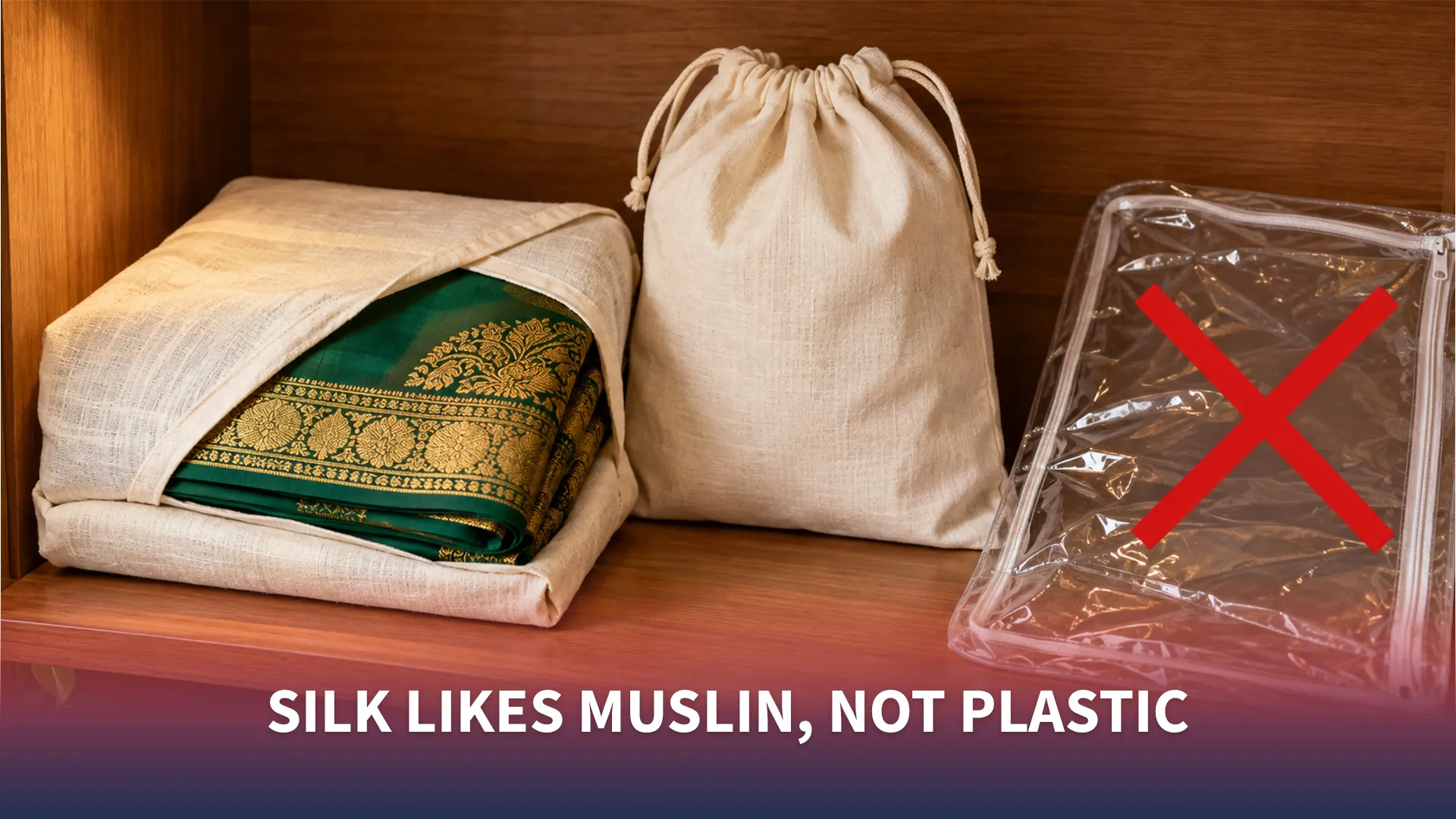
- Wrap in breathable muslin or soft unbleached cotton.
- Re-fold every few months along fresh lines to avoid fold splits.
- Mention authentic metallic zari to the cleaner before drop-off.
- Never store in closed plastic covers (traps moisture and ruins zari).
- Never spray perfumes or colognes directly on silk fibers.
- Never dry silk sarees under direct, harsh sunlight.
Velvet: Do not iron it; do not crush it
All hair is velvety. Press it with a hot iron and you'll flatten that smooth surface and leave a shine you can't undo. Fold it tightly into a bag, and the folds will be in a straight stack.
Instead, hang velvet kurtas, blouses and sherwanis, leaving some space around them. If there are slight wrinkles, leave the piece hanging for a day before trying something else.
They often relax alone. The more stubborn ones need steam from the wrong side or someone who works with velvet regularly.
For sweat, grease, and general grime, velvet needs a solvent clean rather than a wash, so it belongs in dry cleaning your holiday attire. And when it's time to finish, our ironing service adjusts the heat and pressure to the weave, which is the purpose of the hair. If you're tempted to quickly iron it before dinner, don't.

Embroidered pieces: protect the detail
With embroidery, the fabric is rarely the problem. The ornament is. Zari, sequins, mirrors and beads can tarnish, loosen or lose their adhesive in water, which is the main reason why dry cleaning embroidered clothing is usually the safest option for lehengas, dupattas and sherwanis.
Do two things before you deliver one: Take a photo of the piece in good light, so everyone knows what the ornament looked like. And point out anything that's already loose. That saves a “was it like that?” conversation later.
The festive stains deserve special mention. Haldi, kumkum, ghee, sweets, and some diya oil in a sleeve. Dry, do not rub. Avoid water and stain removers, especially on silk. Tell the cleaner what the stain is and where it occurred. Our pre-stain treatment targets oil, food, ink and perspiration marks, and a fresh stain gives you a much better chance than one that's sat in the closet for six months.

Choosing Where to Send Your Festive Clothes
Ask a few direct questions before you book dry cleaning for festive wear:
- Is each garment looked at individually?
- Is the pressing adjusted for the fabric?
- Have they done silk saree dry cleaning with real zari, plus velvet and heavy embroidery?
- How will the clothes come back?
Band Box has been cleaning delicate garments in Bangalore since 1968, with 15 locations across the city. You can see how our process works before you book and check our pricing page if you want to plan your budget.
After Cleaning: Keep It Festival Ready
When you get your clothes back, take them out of the plastic case. Plastic can trap moisture, which is more important when the weather is humid. Hang what hangs, fold what folds and use muslin for saris. We can package pieces ready to hang or folded, so let us know which you prefer.
On the day, go in order: first the perfume, then the outfit, then the jewellery and pins. After the festival, check for diya oil, ashes and food marks before everything is put back in the cupboard. Stains that remain for months only get harder. Caring for festive clothes doesn't end on the day itself, and dry cleaning festive clothes works better as a habit after every big occasion than as a one-time thing before Deepavali.
One more thing: If a piece has become discoloured rather than dirty, cleaning won't fix it. That's a job for our dyeing service.
Deepavali is close. Is your wardrobe ready?
Band Box has cared for silk, velvet and embroidered garments in Bangalore since 1968. Bring your festive outfits in early and let us handle the rest.

Conclusion
Festive outfit dry cleaning works best when it starts early and stays specific. Look over each piece, tell your cleaner what's delicate, and clean only what actually needs it. Silk wants gentle handling and muslin. Velvet wants a cleaner who understands the pile. Dry cleaning for embroidered clothes wants a photo and a conversation first. Do that, and your Deepavali wardrobe will be ready well before the lamps come out.
At Band Box, we've been caring for delicate fabrics in Bangalore since 1968. Not sure where to start? Get in touch or drop in at one of our Bangalore branches, and we'll look at what you've got together.
Frequently asked questions
How early should I send my vacation clothes to the dry cleaners?
Try to do your dry cleaning for special clothes about two to three weeks before Deepavali. This gives time for a test stain and for small repairs. You need to do your dry cleaning during this time because everyone has the same idea and ends up doing it at the same time.
Is dry cleaning safe for embroidered clothes?
Yes, generally speaking. Zari and beads can tarnish and detach in water, so it's better to use solvent cleaning. For your peace of mind, let them know if there are any embellishments that seem loose, and take a picture first to show the original state of the piece.
How do I care for a silk saree between professional cleanings?
Avoid direct exposure to sunlight. The colours can fade. Sprays and perfumes can discolour fabric over time, so use them after draping. Store the saree with either muslin or a soft cotton cloth. A metal or plastic hanger can ruin the fabric over time. Refold it every few months to avoid creases. Have it professionally cleaned after a few uses, or when it gets soiled, as it can trap body oils and dead skin cells.
Can velvet fabric outfits be dry cleaned?
Yes. The fragile nature of velvet fabric means crushing the pile (the fuzzy outer layer) of the fabric with a hot iron can cause the fabric to disintegrate. The same thing can happen by folding the fabric too tightly. So it’s best to get it professionally cleaned and pressed.
What should I do if my festive outfit gets haldi/oil stain?
Don’t rub the stain, as it will spread. Water can discolour silk. So stop there. Note what caused the stain and take it to the dry cleaner as quickly as possible. Fresh stains are usually easier to get rid of.